infinite arms.

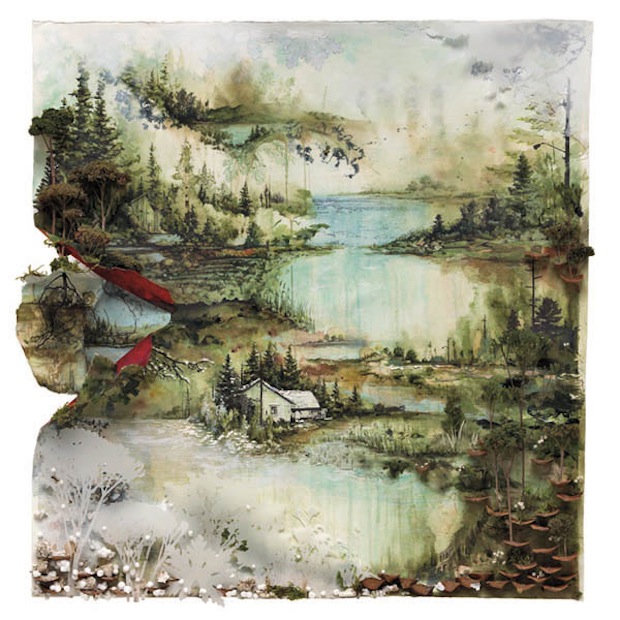
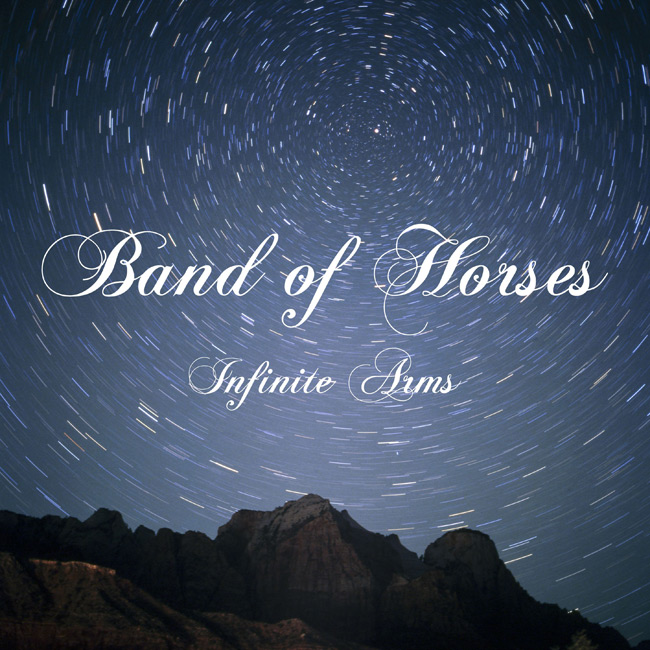
Band of Horses - Infinite Arms I once traded a ’62 Gibson Melody Maker guitar for a ’63 Ford Falcon station wagon.

It was one of those somewhat regrettable deals that occurred more out of the fact that I had a crush on the car’s owner. In catching up with her recently (after more than ten years), I inquired about what happened to the guitar — only to discover that she had sold it to a (now former) member of Band of Horses.

Funny what happens to the objects around us. They have a rich history, and just as often, their own secret future.

Long before the breakout performance of “The Funeral” on The Late Show with David Letterman (not to mention having a track on The Twilight Saga: Eclipse soundtrack), Band of Horses frontman Ben Bridwell rose out of the ashes of a little Seattle band called Carissa’s Wierd. I had the fortunate experience to stumble into a Carissa’s Wierd show years ago at SXSW, purchasing their Songs About Leaving album on the spot. It’s a wonderfully dark punch to the gut — and one that Band of Horses fans should not miss, despite Bridwell’s role being limited to drums and bass guitar. (Mat Brooke, who formed Band of Horses with Bridwell before leaving to start Grand Archives, handled singing duties for Carissa’s Wierd with Jenn Ghetto of S.)
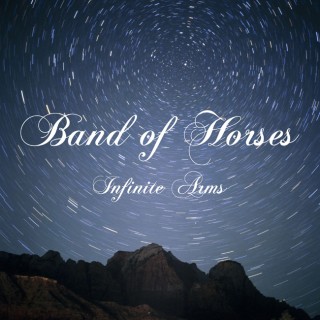
Band of Horses - Cease To Begin Infinite Arms of course continues the melodic alt-country haze of Cease To Begin and Everything All The Time. While there are no particular surprises, Infinite Arms favors the band’s southern rock soul instead of their more atmospheric efforts. Each song conveys its own deep and detailed story, perhaps reflecting a more refined and mature approach to songwriting. Catchy tracks such as “Laredo” and “On My Way Back Home” bring you coming back for more.

Band of Horses - Everything All The TimeI love it when a band keeps continuity of design elements across multiple records, and Band of Horses has done just this with their three full-length albums. Despite significant line-up changes, the Polonaise font has been a consistent script for the band’s name. Designed by Phil Martin, it provides an elegant fit with Christopher Wilson’s photography used on their album covers (two out of three images being of the night sky).
Mark Simonson conducted an amazing interview with Phil Martin in 2004, just before Martin’s death the following year. A bit of history from Simonson:

“In 1969, Martin founded Alphabet Innovations and, in 1974, TypeSpectra. These companies designed and produced over 400 film fonts for use in the VGC Photo Typositor, a machine for setting headline type. Later, some of these typefaces were licensed for use with text setting machines, and many of them are seeing new life as digital fonts through the efforts of Steve Jackaman of Red Rooster and others (including me).”

Martin was a very interesting character, having also worked as a cartoonist and radio comedian. He even occasionally performed as a lounge singer. After all, this is the man that brought us Helvetica Flair. Concerning typographic purists and his playfulness, Martin commented in his interview with Simonson:

“I was accused of typographic incest before my first year of innovations was over. (‘Inzest’ in German, according to my translator Herr Kramm.) The angry typographers who missed out on getting my franchise called Alphabet Innovations, Alphabet Imitations. If you don’t like my Helvetica Flair, just term me the Marquis de Sade of letterforms.”

I wonder if anyone in Band of Horses realizes that the type designer of their preferred font sometimes performed as a lounge singer.

Regardless, I’m sure they would approve.

here’s to taking it easy.

So it’s the middle of summer here in these United States. I live in the South, which means a lot of humid nights. Since it’s pretty much too hot to move much, the best evenings are spent lounging on porches, candles flickering, friends sitting around a table with a box fan and a bottle of wine, listening to something or other on the record player. This particular summer has seen Phosphorescent’s album, Here’s To Taking It Easy, on heavy rotation. It’s pretty much perfect southern summer fare — languid and loose, like Carolina in July. Matthew Houck’s meandering vocals provide the perfect foil for nights out in the heat. Maybe it’s because he’s originally from Northern Alabama, I don’t know.

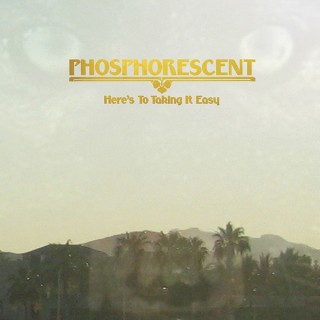
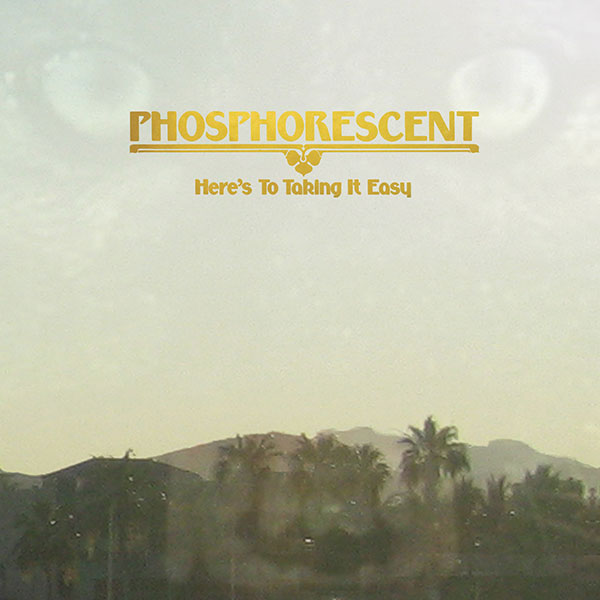
The album cover itself is as sublime as the subtle twang of Houck’s voice. Designed by Daniel Murphy, the cover features a photograph — taken by Houck himself — of a hazy Southern California morning, a menacing wolf overlaid in the background (a recurring theme in Houck’s work). The thing that really sets it off is the decorative font printed in gold metallic, a really exciting and original choice.

The font is Rodin Sans and pretty much the best place to find it is in Dan X. Solo’s Moderne Alphabets. Published by Dover in 1999, the book is a treasure trove of amazing decorative fonts — 100 of them to be exact. As amazing as the book itself is the guy who selected the fonts — the legendary Dan X. Solo. A radio announcer and actor from San Francisco, Solo started collecting antique fonts in 1942, at the tender age of 14. By his early 30′s he was done with the broadcast industry and moved into selling his increasingly large collection of type to ad agencies. In the early 70′s, he started working with Dover on a collection of type books. From Solo’s bio on MyFonts:

I began to supply Dover Publications with mechanicals for books of 100 alphabets on a particular theme. I did 30 of these books over the years, and 30 more of printers’ ornaments, borders, and so forth. Sometime in the 1990s, Dover asked me to digitize books of 24 fonts each, to be sold with a disk in the back. I did 12 of these. The Dover relationship came to an end when Haywood Cirker, the owner and my special friend, died and the company was sold to another publisher. Dover felt that they had covered the type field thoroughly.

Other than a selection of type on MyFonts.com, Dan X. Solo has mostly gotten out of the font business, content to frequent the cruise ship circuit with his wife reading minds for entertainment. I wonder if he ever books porches in the South?

shabooh shoobah.

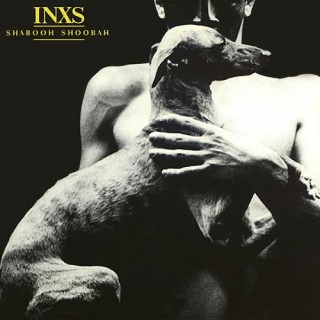
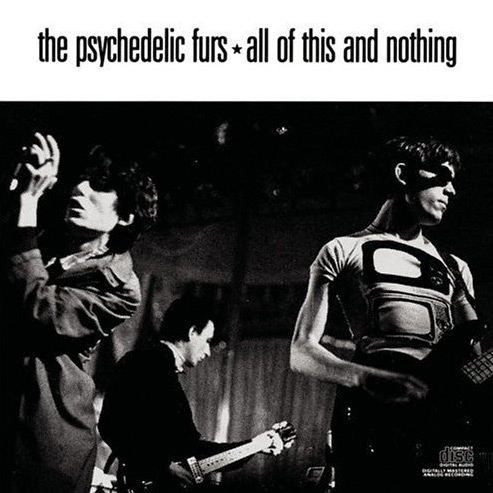
INXS - Shabooh Shoobah Let’s face it. There is quite a bit of saxophone on this 1982 release, the third album from Australia’s INXS. And much like that piece of fruit you left too long in the refrigerator drawer, not all of the sax solos have, uh… aged particularly well. However, such is the case with many of my favorite bands from the 80s (The Psychedelic Furs come directly to mind) — therefore let us not judge a work too harshly outside its own time. Because there are certain hits that transcend, timeless and undeniable regardless of instrumentation, and such is very much the case on Shabooh Shoobah. Thanks in part to the current 80s revival in some indie circles, tracks such as “The One Thing” and “Don’t Change” are as fresh as ever on what many consider to be a lost record of the decade.

“The One Thing,” “Soul Mistake” and “To Look At You” were actually featured on the soundtrack for the 1984 film Reckless (starring Daryl Hannah and Aidan Quinn), helping to expose the band to North American listeners.

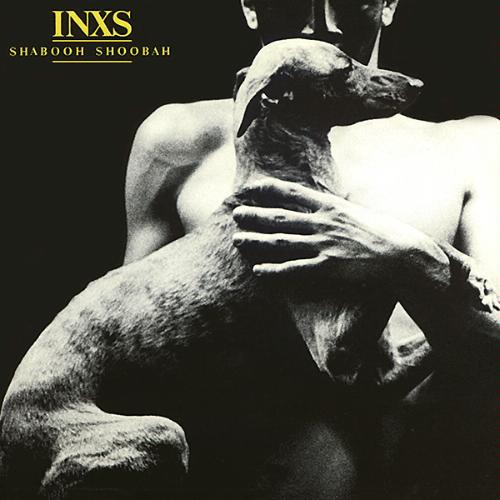
Regarding the typography, the all-caps of Shabooh Shoobah are recognized as Times New Roman Bold (the band’s name at top-left, with some nice kerning to bring the letters “N,” “X” and “S” together). Les covered much of its history in the previous post, so I won’t delve too much there — except to point out that Nimbus Roman, URW’s version of Times New Roman, was released the same year this record came out.

Photographer Grant Mathews and singer Michael Hutchence are credited with the cover concept, which no doubt reinforces INXS’s sexually-charged themes. Today, the cover image feels almost Kubrick-esque with its exposed male torso, dog and mask. These visual elements and the golden text color bring about an archaic and classic vibe, attempting a sort of permanence that the band would struggle towards for years — cut short by Michael Hutchence’s tragic death in 1997.

And out of respect for his passing, we’re going to pretend a certain reality television show named “Rock Star: INXS” never happened. Because it damn well shouldn’t have.

ragin’, full-on.

fIREHOSE - Ragin', Full-OnThis album pretty much changed my life. Shortly before the beginning of my sophomore year in high school, my friend Jason came over to spend the night at my house. We were both skaters, we both loved music, and our friendship was really starting to click.

Aside from being a much better skater, Jason seemed to know more about, well, pretty much everything. In particular, dude put me on to a lot of music. That night, he brought over three cassettes for me to copy, A Tribe Called Quest’s People’s Instinctive Travels … and two fIREHOSE tapes, if’n and Ragin’, Full-On.

I became obsessed with those albums. That obsession fathered a split infatuation with Hip-Hop and independent rock music that lives with me to this day.

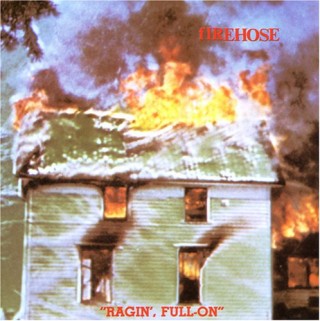
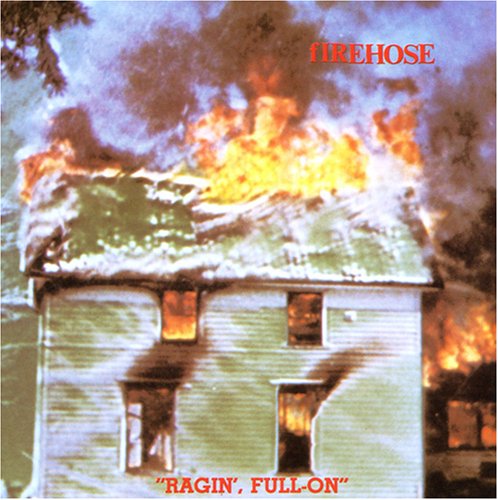
I didn’t have much of a budget in those days, so acquiring music mostly involved raiding friends’ tape collections and dubbing as much shit as I could. I tried to label all these tapes by copying the bands’ names onto the tape cover spines in the same styles as they appeared on the original covers. In the case of fIREHOSE, I reproduced the classic shapes of its Times New Roman Bold letters. The fIREHOSE logo is so simple, but I love it so much, with that rebellious lowercase “f” butting against the bold, workman-like letters of what seems like the default serif face of my generation. That simple play on capitalization turned otherwise common text into a logo that became an icon.

The design of Times New Roman is historically credited to the work of London Times illustrator/designer Victor Lardent under the direction of Stanley Morison for Monotype in 1931. The official story is that Morison, a critic of the typography of the Times, was commissioned by the newspaper to come up with a better, more modern and readable typeface for the paper to use. Morison is said to have based his sketches of the new typeface on Plantin. Lardent took the sketches and Morison’s guidance and used his draftsman skills to make them a reality.

Type historian Mike Parker, who worked as the Director of Typography at Mergenthaler Linotype before teaming with Matthew Carter to found Bitstream, calls this history into question.

Parker insists that Times New Roman was actually born from the hands of William Starling Burgess, a famous yacht and airplane builder who not-so-famously had a side interest in designing type. According to Parker, Burgess had drawn a face for Lanston Monotype in 1904 that ended up sitting in obscurity in the company’s archives for years under the generic name Number 54. Those sketches would eventually be acquired by Morison, who used them as the foundation for Times New Roman.

You can read the details in this fascinating story published last year in the Financial Times. Here’s an excerpt:

“Parker says that in 1921 Lanston Monotype tried unsuccessfully to sell the Number 54 font to a fledgling news magazine called Time. Sometime after that, Burgess’s drawings fell into the hands of Stanley Morison, a type consultant at the Monotype Corporation in Britain, by way of Frank Hinman Pierpont, an American who managed that company’s factory in Surrey and who made a career out of reviving old fonts. … Precisely how Pierpont came upon them, Parker cannot say, but he stands by the theory. ‘Morison knew no bounds,’ says Parker, who has numerous anecdotes about their many encounters that paint a picture of a cunning and devious man. Morison never took credit for designing the font himself, but claims only to have ‘excogitated’ it. Years after its release, [Morison] wrote of the only font that he is credited with designing: ‘It has the merit of not looking as if it had been designed by somebody in particular.’”

Times New Roman’s original designer may forever remain the subject of controversy, but the typeface’s ubiquity is undisputed. As noted on the London Times“infrequently asked questions” page: “Times New Roman became the default font in Microsoft Word, which at least half a billion people use worldwide. It is now the most commonly used typeface in the world.”

That commonness plays well with the working class ethos and lack of pretension that I loved so much about fIREHOSE. The band evolved from the legendary punk band the Minutemen, and in doing so brought along Minutemen’s use of Times New Roman and an aesthetic that rebelled against the stylized self-importance of arena rock.

Of course, fIREHOSE’s music was anything but common. The band built upon Minutemen’s melding of hardcore punk, funk and jazz and expanded the sound to incorporate more traditional rock arrangements. Ragin’, Full-On (fIREHOSE’s debut record in the emotional wake of the death of the Minutemen’s D. Boon) showcases this sound from start to finish. Almost 25 years after its 1986 release, the album still has all the raw and earnest energy that knocked me off my feet when I first heard it.

The title of the album is set in the slab-serif Memphis, designed by Dr. Rudolf Wolf for the D. Stempel AG type foundry in 1930. It sits stoic and firm in its irony beneath the raging flames above.

This record opened doors for me. I fell in love with the DIY ethic that powered the music and that led me to the underground world of independent record stores, mail-order catalogs and wildly diverse sounds that shifted my whole musical paradigm.

And, damned if it didn’t make me want to skate that much harder. After all, skateboarding is what brought fIREHOSE to Jason’s (and thus my) attention in the first place. The lead track on Ragin’, Full-On, “Brave Captain,” is the soundtrack to one of the most storied skate video clips of all time, Natas’ legendary segment in Santa Cruz’s Streets On Fire. To this day, every time I hear “Brave Captain” I think of Natas spinning on that fire hydrant and rail-sliding that truck’s roll bar.

closer.

David Shaw Editor’s Note: We were more than pleasantly surprised when David Shaw contacted us to share his Belm Blog post on Joy Division’s Closer. Inspired by Eric’s post on Unknown Pleasures and a little Joy Division obsession, David really knocks it out of the park — and it’s our pleasure to re-publish it here. When not rocking that font, David is a music critic and amateur graphic designer. He blogs about music and design, but mostly about cooking.

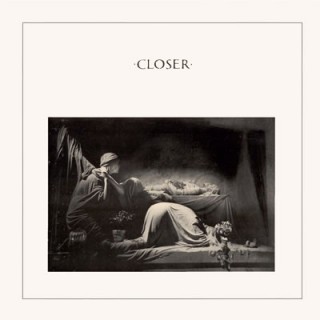
Joy Division - Closer As synchronicity would have it, I have been reading and watching a lot of media about Joy Division; Factory, their record label; and Peter Saville, Factory’s first graphic designer. Saville designed Unknown Pleasures, and somehow managed to follow up that feat a year later with another Joy Division icon, the cover of Closer. (The title is pronounced with a soft “s,” as in “more intimate” or “nearer to a goal,” not with a hard “z” as in “one who closes or concludes.” Pedantry, yes, but mispronouncing the name of this album will not put you in my good graces.)

As with their first album, the band’s name doesn’t appear on the front. They explained to Saville that their name on the cover was self-aggrandizing, not cool. At Factory’s insistence, the briefest of credits appears on the back:

Closer - Rear Peter Saville Associates (PAS) consisted of Saville, Martyn Atkins, Ben Kelly, and a small stable of photographers including Trevor Key. But this particular design — like the album before it — was a brilliant combination of stark type and a riveting image. I can’t do better than the description provided in Matthew Robertson’s Factory Records: The Complete Graphic Album:

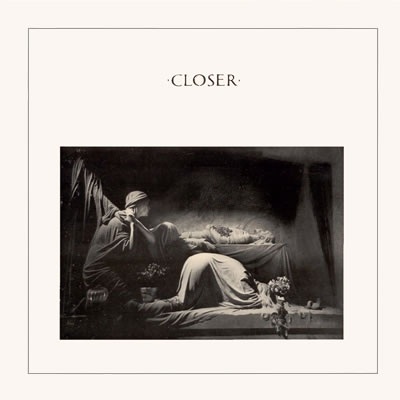
The now-iconic image on the cover of Closer is a photograph by French photographer Bernard-Pierre Wolff. Taken in 1978, at the Staglieno Cemetery in Genoa, it shows a crypt filled with figures in mourning. This Neo-Classicist imagery was complemented with typography based on a 2nd-century Roman alphabet. These elements combine with the textured stock to create a visual experience that mirrors and enhances the music. The imagery on the cover took on greater significance after the suicide of lead singer Ian Curtis, which happened during the manufacturing of the album. Although the concept for the sleeve had been approved by the band before his death, both the label and the designers were accused of exploiting the tragedy when it was decided not to withdraw the artwork.

As a sleeve design, it’s an absolute tour de force. If you purchased the vinyl album in the pre-CD days, you had no choice but to confront the photo, which was just as haunting if you had no knowledge of Curtis’ death. That image, that title, were inseparable from the music; they irreversibly colored your perception of the songs. I can’t imagine that those same tracks, purchased as a digital download without the artwork, could possibly have the same impact on the listener.

But this isn’t supposed to be about the music, the band, or the photograph, it’s supposed to be about the typography. At first glance, most designers would identify the font as Trajan, a typeface designed by Carol Twombly for Adobe, based on the inscription at the base of Trajan’s Column. Careful inspection will show marked differences between Trajan and the face Saville used.

There’s a clue in the preceding description of the cover: “…typography based on a 2nd-century Roman alphabet.” What is the source of that alphabet? How did Saville find it? I was not the only person interested in that question, in fact, some diligent Googling revealed a discussion thread at Typophile that resolved the mystery:

The original lettering for the ‘Closer’ album was taken from ‘The Development of Writing’ by Hans Eduard Meier, which I believe was first published in the late 1950s and then in the late 1960s. The later reissue no longer shows this piece of lettering, though you can find it here. It’s a very nice piece of work, even though the letter J is a little unconvincing. Perhaps its unfamiliarity makes it more appealing than the ubiquitous Trajan.

Saville then made PMTs [photomechanical transfers] of the lettering and then composed all of the lines. The use of Roman numerals on ‘Closer’ is a give away that Saville could not draw letters (or numerals). In the 1990s Tobias Frere Jones was interested in making a digital revival, but nothing came of it I understand. A digital version was made I believe for the reissues.

Mystery solved. If a digital version of the font was made for CD reissues, it isn’t publicly available. Dan Gayle, who originated the discussion, has designed a complete font set, but can’t release it due to his inability to obtain the necessary permissions.

Maybe that’s a good thing, insuring that Closer’s typography is as one-of-a-kind as its music.